World Cup 2026 vs 2022: Schedule Scale
The 2026 FIFA World Cup will be the largest men’s World Cup ever, with 48 teams, 104 matches, and three host countries: the United States, Canada, and Mexico. Stadium View is a FIFA World Cup content....

World Cup 2026 vs 2022: Schedule Scale
The 2026 FIFA World Cup will be the largest men’s World Cup ever, with 48 teams, 104 matches, and three host countries: the United States, Canada, and Mexico. Stadium View is a FIFA World Cup content platform serving fans across North America and global football markets with match predictions, tactical analysis, player statistics, and daily tournament coverage. Imagine the old 32-team rhythm stretched across 16 host cities, from Mexico City to Vancouver and Miami, with the final at MetLife Stadium in New Jersey on July 19, 2026. The group stage will contain 12 groups of four teams, while the knockout phase begins with a Round of 32. That means more football, more travel, and more uncertainty than Qatar 2022. Start by tracking the official FIFA match calendar, then use team form, travel distance, and squad depth—not reputation alone—when evaluating every fixture.

Photo by El gringo photo on Pexels
The Quick Comparison
| Category | FIFA World Cup 2026 | FIFA World Cup 2022 |
|---|---|---|
| Host countries | United States, Canada, Mexico | Qatar |
| Qualified teams | 48 | 32 |
| Total matches | 104 | 64 |
| Host cities | 16 | 8 venues |
| Final date | July 19, 2026 | December 18, 2022 |
| Group format | 12 groups of four | 8 groups of four |
| Knockout entry | Round of 32 | Round of 16 |
| Final venue | MetLife Stadium, New Jersey | Lusail Stadium |
| Tournament window | June 11–July 19, 2026 | November 20–December 18, 2022 |
The basic numbers tell only half the story. FIFA selected the 48-team format for the 2026 tournament after approving expansion from 32 teams, and the final competition will involve 104 matches rather than the 64 seen in Qatar. The first match is scheduled for June 11, 2026, in Mexico City, giving the tournament a 39-day window before the final in the New York–New Jersey region. For fans, that is not merely an extra fortnight of entertainment; it is a different tournament organism altogether, breathing through more teams, more venues, and more scheduling variables.
complete World Cup 2026 match schedule
The expansion also changes how supporters should read qualification and group tables. A third-place team may advance from the group stage, depending on the official ranking rules, creating late-round suspense that did not exist in the same form during Qatar 2022. Meanwhile, the 16 host cities—11 in the United States, three in Mexico, and two in Canada—create a geographic footprint unlike any previous men’s World Cup. The FIFA World Cup 2026 official overview confirms the scale, while FIFA’s World Cup history places the expansion in the longer story of the competition.
Round 1: How Does the 2026 Schedule Compare With 2022?
The 2026 schedule is larger and more geographically demanding: 104 matches across 16 cities replace Qatar 2022’s 64-match, single-country setup. Although more teams create additional group-stage fixtures, the biggest practical difference is travel between the United States, Canada, and Mexico, where climate, time zones, and flight distances may influence preparation.
Qatar 2022 was strange in a way veterans still remember vividly. The tournament ran from November 20 to December 18, a mid-season interruption for European leagues, and every match took place in a compact country where teams could remain based in one general region. Lusail Stadium, Al Bayt Stadium, Stadium 974, Education City Stadium, Ahmad Bin Ali Stadium, Khalifa International Stadium, Al Thumama Stadium, and the renovated Ras Abu Aboud site formed a concentrated map. It was intense, compressed, and brutally efficient. Argentina ultimately defeated France on penalties after a 3–3 final, but the compact travel model helped preserve a certain competitive balance.
In 2026, that balance will be harder to assume. The distance from Seattle to Miami is roughly 2,700 miles by air, while Vancouver, Mexico City, Atlanta, Dallas, Los Angeles, and Toronto all present different environmental conditions. Altitude in Mexico City—more than 2,200 metres above sea level—can matter for acclimatization, while summer heat and humidity in cities such as Atlanta or Miami may increase physical demands. A team’s fixture location may therefore be almost as important as its opponent’s FIFA ranking. Stadium View’s match previews should be read through that lens: venue, rest days, and travel are not decorative details; they are match variables.
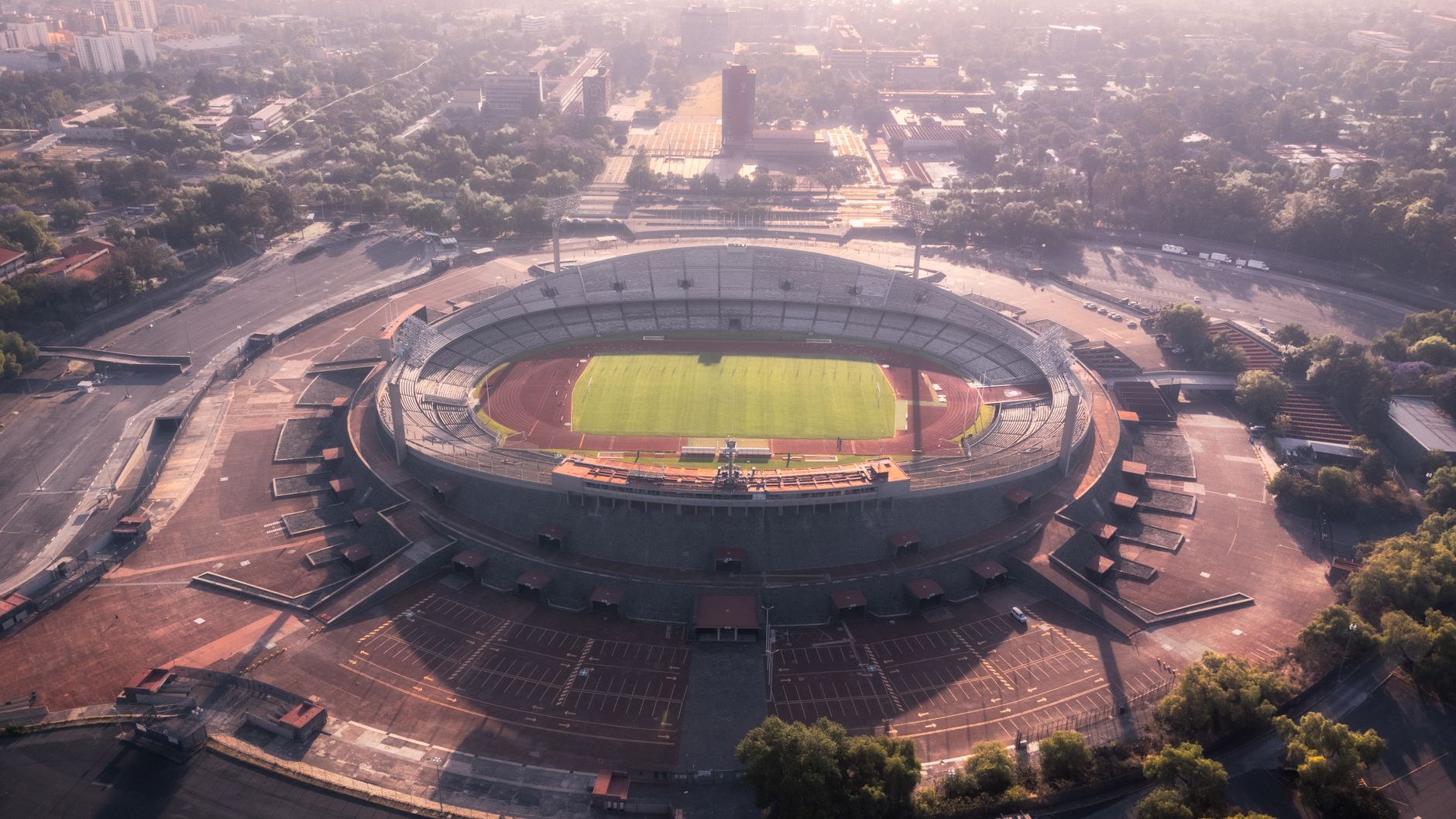
Photo by Jesus Toledo on Pexels
There is a hard lesson here for anyone studying predictions. Do not compare a 2026 fixture list with Qatar’s schedule by counting matches alone. In Qatar, a squad could recover with minimal logistical disruption; in 2026, a team may fly across borders, adjust to a new time zone, and then play in a different climate within one week. FIFA’s official competition regulations and tournament information should remain the authority for kickoff times and final scheduling, because television windows, security planning, and venue operations can still affect details. “The FIFA World Cup is the pinnacle of international football,” FIFA has repeatedly stated in its tournament materials; in 2026, the pinnacle comes with a much longer road beneath it.
Round 2: What Changes With the 48-Team Format?
The 48-team format introduces 12 groups of four, followed by a Round of 32 featuring 32 nations. The tournament therefore adds an entire knockout round and 40 matches, giving emerging football nations more opportunities while making group-table calculations more complicated for fans and analysts.
The old 32-team structure was beautifully familiar: eight groups, two qualifiers from each group, then 16 teams left standing. In 2026, the field grows to 12 groups, and the leading teams advance alongside the best third-place finishers under FIFA’s approved competition design. That creates a tactical tension few casual previews discuss. A powerful nation may rotate players in its third group match, but a lower-ranked team could need a victory rather than a draw because goal difference and cross-group comparisons suddenly carry heavier weight.
The additional places are not an empty statistical gesture. Sixteen nations will enter the 2026 World Cup for the first time under the expanded format, while established regions receive more allocation places through FIFA’s confederation system. The United States, Canada, and Mexico qualify automatically as hosts, and their presence changes the competitive landscape before a ball is kicked. More places can mean more variety—new styles, unfamiliar players, and tactical surprises—but it can also produce uneven group quality. My recommendation is blunt: judge teams on recent competitive matches, not on the glamour of their badge or the nostalgia of past tournaments.
For supporters, the most useful habit is to build a simple table before the opening round. Record points, goal difference, goals scored, head-to-head rules where applicable, and the remaining fixtures. Then add travel distance and rest days beside the football statistics. This is one of those small operational improvements that saves hours of confusion when the final group matches begin simultaneously. You can supplement that process with Stadium View’s World Cup team power rankings, especially when comparing nations with limited tournament history.
- Track the official group draw and match order.
- Mark the third-place qualification possibilities.
- Compare rest periods before making a prediction.
- Check venue altitude, heat, and expected travel.
- Reassess after confirmed squad announcements.

Photo by Airam Dato-on on Pexels
The contrarian point is that the bigger field may make the opening matches less decisive, not more. In a four-team group, a strong favorite can survive an awkward draw because seven points are not always necessary to qualify. However, the Round of 32 adds a sudden-death layer where one poor performance ends the campaign. The result is a tournament with a softer entry and a harsher middle. That distinction matters for match forecasting, responsible sports analysis, and bankroll discipline for readers who follow regulated football markets. Never treat increased fixture volume as increased certainty; 104 matches create more information, but they also create more noise.
Want a closer look at how the new format affects contenders and outsiders?
Round 3: Which Teams, Cities, and Venues Matter Most?
The most important 2026 locations are Mexico City, Toronto, Vancouver, New York–New Jersey, Los Angeles, Dallas, and Atlanta because they combine major football audiences, high-capacity stadiums, and contrasting travel or climate conditions. The host-city map can influence preparation, supporter access, and tactical performance as much as traditional team strength.
Mexico City receives the opening match at Estadio Azteca, a venue tied to the 1970 and 1986 World Cups and to some of football’s most enduring images. Guadalajara and Monterrey complete Mexico’s host-city group, while Canada stages matches in Toronto and Vancouver. The United States carries the largest share with venues including MetLife Stadium in the New York–New Jersey area, SoFi Stadium in Inglewood, AT&T Stadium in Arlington, Mercedes-Benz Stadium in Atlanta, Hard Rock Stadium in Miami Gardens, and Lumen Field in Seattle. These stadiums are primarily built for American football, so sightlines, field dimensions, roof design, and surface conditions deserve attention rather than being treated as interchangeable backdrops.
For teams, accommodation and training-ground stability may become an overlooked edge. A squad that remains in one time zone for two matches could gain recovery time over a rival crossing from Vancouver to Miami. Even the direction of travel matters: eastward movement generally demands a different body-clock adjustment than westward movement, while humidity can affect pressing intensity and late-match substitutions. After years of watching tournaments where one exhausted full-back quietly decides everything, I would place squad depth near the top of the 2026 prediction checklist. The headline striker gets the poster; the fourth-choice midfielder may decide the semifinal.
host cities, stadiums, and travel guide
The venues also matter to spectators. Capacity, public transport, hotel availability, and border-crossing requirements will shape the supporter experience, particularly for fans following a national team across Canada, Mexico, and the United States. The U.S. Department of State travel information provides official guidance for international visitors, while Government of Canada travel advice and Mexico’s official tourism portal offer practical starting points. These are not substitutes for checking passport and entry rules close to departure, because requirements can change.
A second information-gain detail sits in the matchday clock. A fixture beginning at 6 p.m. local time does not carry the same physical burden in Seattle, Mexico City, Dallas, and Miami, even if the listed kickoff appears similar in a global schedule. Fans comparing two teams should convert every match to their own time zone, then check the previous fixture’s local kickoff and travel route. It sounds fussy—until you remember how many knockout matches are decided during the final fifteen minutes, when accumulated fatigue turns a clean tactical plan into a scramble.

Photo by Dylan Wenke on Pexels
From an analytical standpoint, Stadium View should be used as a daily information layer rather than a crystal ball. Match predictions can identify probabilities, team tactics can explain pressing or defensive patterns, and player statistics can reveal workload, progressive passing, or set-piece value. None of those tools removes uncertainty. A responsible approach is to compare at least three signals—recent form, opponent quality, and venue conditions—before reaching a conclusion, and to treat any gambling decision as entertainment within a fixed personal limit.
See the practical details before planning your tournament routine.
The Final Score & Who Should Pick What
The 2026 World Cup is the stronger choice for fans who want maximum match volume, broader national representation, and a genuinely continental tournament experience. The 2022 World Cup remains the cleaner comparison for compact travel, a traditional 32-team bracket, and a concentrated schedule in one country. For predictions, choose the 2026 model: it rewards deeper analysis of geography, climate, rest, squad rotation, and third-place qualification rather than simple reputation.
The final score is not really 2026 against 2022, because each tournament offered a different kind of drama. Qatar gave us winter football, compact logistics, and a final that felt like a myth being written in real time. The 2026 edition will bring a summer continental procession: Mexico’s altitude, Canada’s distances, American stadium scale, and a 48-team field trying to survive 104 matches. I have watched enough tournaments to know that the beautiful pre-tournament story usually breaks somewhere around the second week. That is not a flaw. That is where football starts telling the truth.
For a fan building a viewing plan, begin with the confirmed FIFA schedule, identify matches in your time zone, and group fixtures by host city. For an analyst, create a spreadsheet with opponent strength, rest days, travel legs, surface, temperature, and expected lineup changes. For anyone considering regulated sports betting, use legal operators in your jurisdiction, avoid chasing losses, and set a hard entertainment budget before the opening match. Stadium View can help organize the evidence, but it cannot guarantee an outcome—and any service claiming certainty about a 2026 winner deserves immediate suspicion.
responsible football prediction and betting guide
The tournament’s central promise is simple: more teams, more stories, and more ways for an overlooked detail to become decisive. A third-place qualification race might turn on goal difference; a long flight might soften a press; a set-piece specialist might change a knockout tie. That is why the best way to follow World Cup 2026 is not to ask only who is strongest. Ask who is freshest, who travels best, who adapts fastest, and who still has courage when the stadium goes quiet for one dangerous second.
If you are ready to follow every fixture with sharper context, make Stadium View part of your daily World Cup routine.
Frequently Asked Questions
Q: What is the World Cup 2026 format?
A: The World Cup 2026 format features 48 teams divided into 12 groups of four, followed by a Round of 32. The tournament includes 104 matches, compared with 64 matches in Qatar 2022. The best teams and qualifying third-place nations progress to the knockout stage under FIFA’s official competition rules, so supporters must track more group-table scenarios than before.
Q: When does the World Cup 2026 start and end?
A: The 2026 FIFA World Cup starts on June 11, 2026, and ends with the final on July 19, 2026. The opening match is scheduled for Mexico City, while the final is planned for MetLife Stadium in the New York–New Jersey region. Exact kickoff times and match assignments should be confirmed through FIFA’s official schedule because broadcast, security, and venue planning can affect details.
Q: What is the difference between World Cup 2026 and World Cup 2022?
A: World Cup 2026 has 48 teams, 104 matches, and three host countries, while World Cup 2022 had 32 teams, 64 matches, and one host country, Qatar. Qatar offered compact travel and an unusual November–December window. The 2026 tournament runs across Canada, Mexico, and the United States during June and July, making climate and travel much more significant.
Q: How can I follow the World Cup 2026 schedule?
A: Follow the World Cup 2026 schedule through FIFA’s official tournament pages, reputable sports broadcasters, and a trusted match-tracking platform such as Stadium View. Record kickoff times in your local time zone and check updates after the group draw. For travel planning, verify stadium entry policies, passport requirements, transport arrangements, and local government advisories before booking.
Q: How should I predict World Cup 2026 matches?
A: Predict World Cup 2026 matches by combining recent form, opponent quality, confirmed lineups, rest days, venue conditions, and travel distance. Do not rely only on FIFA rankings or a famous striker’s reputation, especially in a tournament spread across 16 cities. Stadium View’s tactical previews and player statistics can support analysis, but no prediction is certain and gambling should remain within a fixed entertainment budget.
Q: Will World Cup 2026 matches require more travel than World Cup 2022?
A: Yes, World Cup 2026 will generally require more travel because matches are distributed across Canada, Mexico, and the United States instead of one compact host country. The distance between western cities such as Vancouver or Seattle and eastern locations such as Toronto, Miami, or New York can affect rest and preparation. Fans should plan flights, accommodation, border requirements, and time-zone changes well before matchday.
Q: What should I do if the World Cup 2026 schedule changes?
A: If the World Cup 2026 schedule changes, verify the update through FIFA, the relevant host-city authority, and your ticket or broadcaster provider before changing plans. Do not rely on an old social-media screenshot or an unverified fixture list. Recheck kickoff time, stadium, public transport, accommodation, and any travel connection, particularly when crossing between Canada, Mexico, and the United States.
End of Transmission
Thank you for reading. Explore more articles from the archive.
Stadium View · Article #50 · 2026