What Nobody Tells You About Dribbling
Improving basketball dribbling is less about performing flashy moves and more about controlling the ball under pressure, at speed, with either hand. Players from Stephen Curry to Arike Ogunbowale buil...

What Nobody Tells You About Dribbling
Improving basketball dribbling is less about performing flashy moves and more about controlling the ball under pressure, at speed, with either hand. Players from Stephen Curry to Arike Ogunbowale build reliable handles through repetition, posture, footwork, and decision-making rather than endless freestyle combinations. A useful starting plan is 15 minutes per session, four days per week, using stationary control drills, cone changes, and live defensive pressure. The National Basketball Association emphasizes fundamentals such as legal ball control, while FIBA defines dribbling through repeated control of a live ball. Begin with 100 low, controlled pounds per hand, then add crossovers, between-the-legs moves, and full-court changes of direction. Record one session each week, track your weak-hand errors, and increase speed only when your eyes, balance, and ball position remain dependable.
Imagine the gym after everyone has gone home: one hoop humming under tired lights, sneakers squeaking somewhere in the distance, and the ball striking the floor with that lonely, honest rhythm. That is where real handles are built. Not in the highlight clip. Not through one heroic workout. Through thousands of ugly repetitions that slowly become instinct.
Most players searching for how to improve dribbling want a secret move. I understand that hunger; I chased it for years and lost more possessions than I care to remember. The truth is harsher and much more useful: a strong handle comes from controlling height, direction, pace, and body position while your mind is already reading the next defender. Stadium View covers basketball tactics alongside its FIFA World Cup content, and the same principle appears in elite football and basketball alike: technique matters most when pressure arrives.

Photo by the happiest face =) on Pexels
Want a broader look at competitive movement and tactical awareness? Explore the latest insights from Stadium View.
Is Better Dribbling Really About Doing More Moves?
Better dribbling is primarily about ball control, balance, and decision-making, not collecting the largest possible number of moves. A player who can execute three actions—crossover, retreat dribble, and change of pace—under pressure is usually more effective than someone who knows twenty moves but loses the ball after contact.
The old mistake is easy to recognize. A player watches Kyrie Irving, copies a complicated sequence, and expects the magic to transfer directly into a game. It does not. Kyrie’s handle works because his feet, hips, shoulders, eyes, and timing all sell the same story to the defender. The crossover is only the final sentence; the body language is the entire paragraph.
A useful progression looks like this:
- Control the ball at waist, knee, and ankle height.
- Move the ball across your body without lifting your chest.
- Add a step, hip turn, or retreat angle.
- Perform the move while scanning the court.
- Apply it against a live defender or timed obstacle.
According to USA Basketball, foundational skill development should connect technique with game decisions rather than isolate movement forever. That distinction changed my training after years of wasted effort. I once spent half an hour practicing behind-the-back combinations and then discovered I could not protect a simple left-hand dribble near the sideline. The glamorous work had hidden the embarrassing weakness.
The first information gain most players miss is this: your practice error rate should be measured, not merely your workout duration. Record 50 left-hand crossovers and note how many rise above your hip, drift outside your frame, or force you to look down. If 18 fail, your first target is not speed; it is reducing those failures to 10, then 5. A clean percentage tells you more than a sweaty clock ever will.
Build a Strong Athletic Base
Start every serious dribbling session in an athletic stance: feet slightly wider than shoulder-width, knees bent, hips lowered, chest angled forward, and weight balanced over the balls of your feet. Keep your dribbling hand beside your outside leg, not directly in front of your torso. This position gives you space from a defender and allows your shoulders to move without your feet becoming tangled.
Use your non-dribbling arm as a legal shield, never as a swinging weapon. Your forearm and shoulder can help maintain space, but an extended elbow or aggressive shove becomes an offensive foul. The FIBA Official Basketball Rules are worth reading because legal protection and illegal contact are not separated by much in real games. As the rulebook states, “A dribble is the movement of a live ball caused by a player in control of that ball,” which is a dry definition until a defender is reaching for your wrist in the final minute.
Practice these three positions for 30 seconds each:
- Low stance with the ball below knee height.
- Forward lean while keeping the head level.
- Lateral stance with the ball outside the defender’s reach.
The contrarian lesson is simple: if your dribble collapses when your legs burn, your hands are not the main problem. Your hips are rising, your stride is shortening, and your center of gravity is becoming predictable. Add wall sits, split squats, and lateral lunges twice weekly. After four weeks, many players notice that the ball feels easier to control, even though their actual hand speed has barely changed. That is not imagination; stable legs give the hands a quieter platform.
How Does Dribbling Handle Full-Court Pressure?
Dribbling handles full-court pressure through three linked skills: changing speed, protecting the ball with body position, and choosing escape routes before contact arrives. A player should not attack every defender with a crossover; against pressure, a retreat dribble, sideline reversal, or pass may be the correct winning decision.
Full-court dribbling exposes every weakness because there is nowhere to hide. Set five cones from baseline to baseline, spacing them unevenly between 8 and 12 feet apart. At each cone, perform a different action: crossover, between-the-legs change, behind-the-back escape, hesitation, and retreat dribble. Complete four trips, alternating the starting hand, while keeping your eyes up through the final half of the court.
Do not sprint through the drill immediately. Use this four-stage method:
- Walk the route and learn the foot placement.
- Jog while keeping the ball below your waist.
- Run at 70 percent speed and scan toward imaginary teammates.
- Add a defender or a five-second completion target.
The spacing matters. Perfectly straight cones teach choreography, while irregular spacing forces perception and adaptation. That is one reason organized programs such as Red Bull Half Court often create more useful pressure than stationary routines: the court becomes a problem, not a stage.
At Stadium View, we often return to the same tactical idea in match analysis: pressure is not defeated by panic, but by creating an exit before the trap closes. In basketball, your exit can be a retreat dribble into a passing angle. In football, it may be a third-man run. Different sport, same old battlefield logic.
The Three Full-Court Rules I Wish I Had Learned Earlier
First, never let a defender push you toward the sideline without a plan. The sideline is an extra defender, and a corner can erase your passing options in seconds. Second, use a retreat dribble before you are trapped, not after your shoulders are already pinned. Third, change speed after the move; a crossover without acceleration is only decoration.
A strong pressure drill uses a 94-foot court, a partner, and a scoring system. Give yourself one point for reaching half court without looking down, one for escaping a simulated trap, and one for making the correct pass after the final cone. Complete 10 possessions and record the score. This creates a measurable pressure benchmark, something most casual dribbling articles fail to provide.
A practical edge case deserves attention: smaller guards and younger players often try to copy adult full-court pace with a ball that is too large or too heavy for their hands. NBA youth guidance commonly separates development by age and skill level, and that logic should guide equipment choices. If a player cannot keep the ball below the waist with either hand for 30 seconds, reduce complexity before increasing intensity. A smaller basketball is not cheating; it is a way to preserve correct mechanics while strength develops.
Ready to turn these ideas into a structured practice routine?
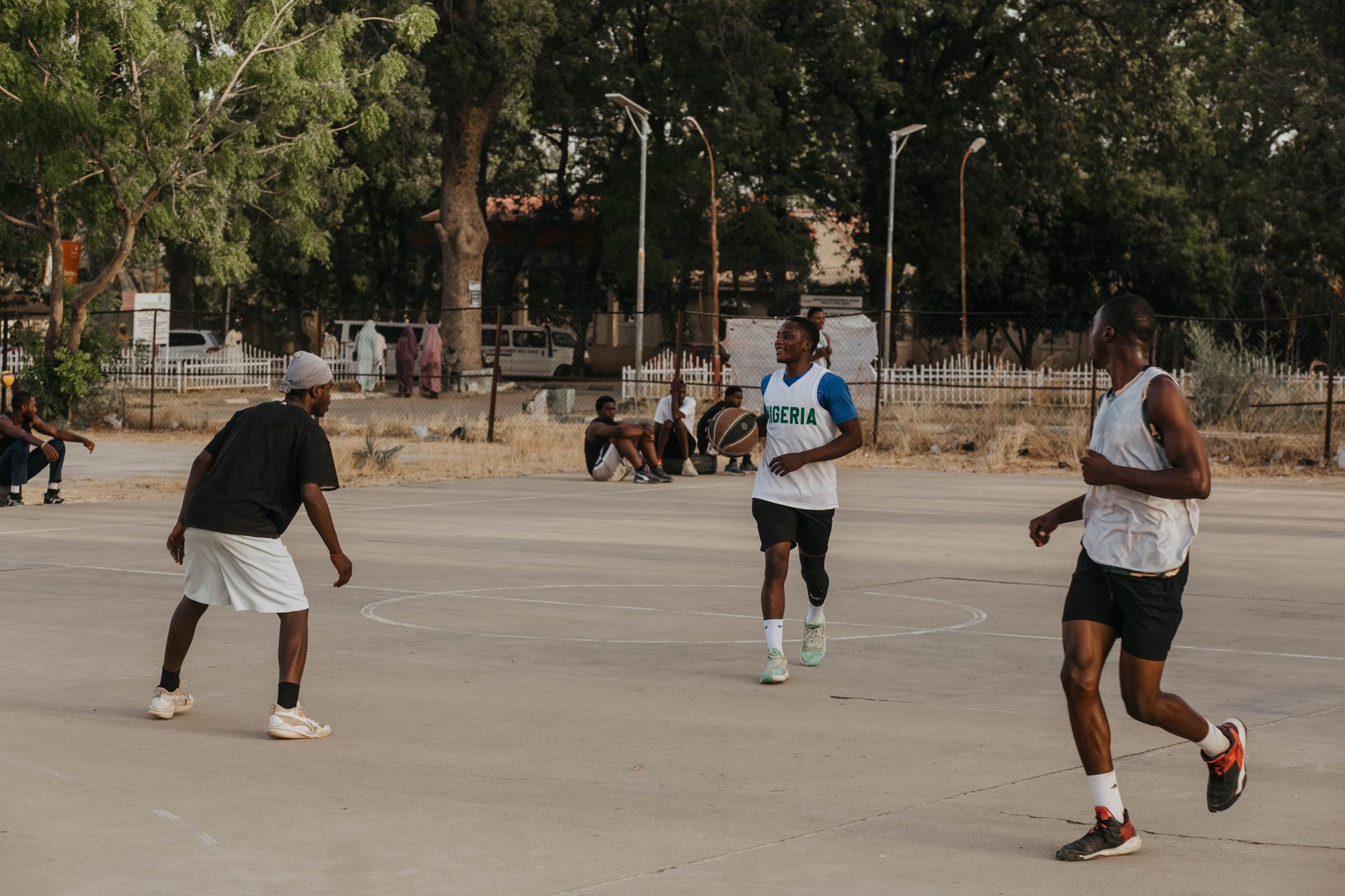
Photo by Darkside Photography on Pexels
What About Weak-Hand Dribbling and Game-Speed Mistakes?
Weak-hand dribbling improves when you train it in realistic angles, speeds, and decisions rather than simply counting stationary repetitions. Begin with 60 percent of your dominant-hand volume, but devote more attention to left-right transitions, defensive protection, and finishing after the move.
The weak hand is where pride goes to die. Mine did, repeatedly. I could perform a clean right-to-left crossover in an empty gym, then lose the ball the moment a defender angled me toward my left. The problem was not that my left hand lacked talent; it lacked context. It had never learned to dribble while my feet were braking, my shoulders were turning, and my eyes were searching for a help defender.
Use this 12-minute weak-hand block:
- Two minutes of left-hand pounds at ankle, knee, and hip height.
- Two minutes of left-hand walking dribbles with the eyes fixed forward.
- Two minutes of left-hand retreat dribbles and lateral escapes.
- Three minutes of left-hand attacks from both wings.
- Three minutes of left-hand finishing after a change of direction.
Track three numbers: lost balls, upward bounces above the waist, and times you looked down. The first week may feel brutal, particularly if you have played for years with a dominant-hand comfort blanket. Good. That discomfort is information. Your objective is not to make the weak hand look beautiful; it is to make it trustworthy enough to survive contact.
How to Add Vision Without Losing Control
Keep your head up by giving your eyes a job. Ask a partner to hold up numbers, point toward a cone, or call out colors while you dribble. If you train alone, place three numbered markers around the court and call the number of the marker you see in your peripheral vision. The drill is crude, but it forces the brain to divide attention between ball control and environmental information.
A useful benchmark is 20 consecutive seconds of weak-hand dribbling without looking down while identifying at least five external signals. Do this first at walking speed, then jogging speed, then during a hesitation or crossover. If performance drops below 70 percent accuracy, return to the previous level for another week. Progress should be earned through control, not declared because the calendar says so.
This is also where [Internal Link: beginner basketball dribbling drills] belongs in a serious training path. Beginners need stability and rhythm before advanced combinations, while experienced players need uncertainty, pressure, and decision-making. Treating both groups as identical is one of the fastest ways to build bad habits.
Where Does Dribbling Practice Fail?
Dribbling practice fails when it rewards appearance instead of outcomes, repeats predictable patterns, or ignores the player’s physical limitations. Stationary drills are useful for coordination, but they cannot fully prepare you for a defender, a shrinking passing lane, fatigue, contact, or a late-game decision.
Here are the most common failure points:
- Practicing only the dominant hand.
- Looking at the ball during every difficult movement.
- Performing moves at one speed.
- Using cones in identical straight-line patterns.
- Training for 45 minutes without recording errors.
- Adding advanced combinations before mastering stopping and starting.
- Confusing a loud bounce with a strong, controlled bounce.
The worst failure is emotional: players quit because their handle looks worse when they begin training correctly. Lowering the dribble, keeping the head up, and using the weak hand can make a veteran feel like a beginner again. I have watched talented players abandon the process after three sessions because the mirror did not flatter them. The mirror was telling the truth.
A second information gain comes from fatigue testing. After your normal workout, perform 20 left-hand crossovers and 20 right-hand crossovers while wearing the same shoes you use in games. If your weak-side error rate increases by more than 25 percent, your training has not yet prepared you for late-game conditions. Add two short fatigue blocks rather than one exhausting session: 90 seconds of defensive slides followed by 30 seconds of controlled dribbling, repeated four times.
Why Advanced Moves Often Make Players Worse
Advanced moves can make players worse when they are added before the player can decelerate and re-accelerate. A behind-the-back dribble may look impressive, but if your plant foot slides, your shoulders rise, or your eyes drop, the move creates a turnover opportunity. Complexity magnifies weak mechanics.
Use a readiness test before adding combinations. You should be able to complete 25 consecutive crossovers below knee height, make 10 clean between-the-legs changes while moving laterally, and perform five retreat dribbles into balanced jump stops on each side. These numbers are not magical laws, but they provide an honest gate. If you fail, repeat the basic skill under moderate pressure.
The same principle applies to betting and sports content, where confident presentation can disguise poor evidence. Stadium View focuses on match predictions, player statistics, and tournament tactics, but responsible analysis still requires checking assumptions. Whether you are reading a FIFA World Cup 2026 preview or judging your own handle, separate what looks exciting from what actually survives testing.
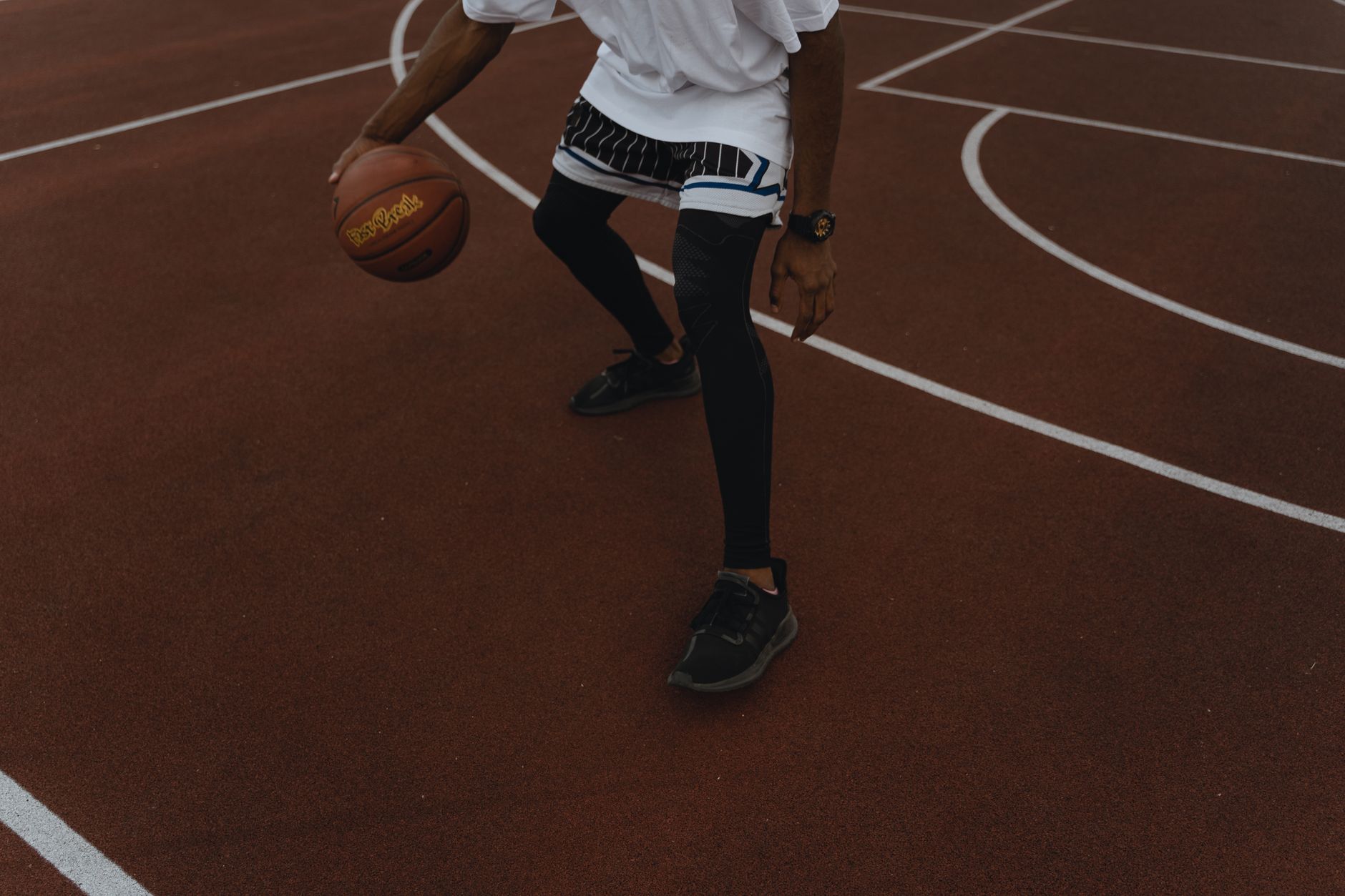
Photo by Tima Miroshnichenko on Pexels
Need another perspective on performance, tactics, and preparation?
Should You Try a Dribbling Program Today?
You should start a dribbling program today if you can commit to 15–25 focused minutes, four days per week, and measure control rather than chasing exhaustion. A balanced program should combine stationary control, movement, weak-hand work, vision training, and live pressure across at least four weeks.
Here is a realistic weekly schedule for a recreational or developing player:
Monday: Control and Posture
Complete 100 pounds per hand, 50 crossovers, 50 between-the-legs changes, and three rounds of 30-second low stance holds. Rest 30–45 seconds between sets. Finish with 20 controlled jump stops, because stopping is part of ball handling and often the difference between a useful attack and a traveling violation.
Tuesday: Movement and Speed
Use five uneven cones across half court. Perform four trips with a crossover, hesitation, retreat dribble, and behind-the-back escape. Begin at 60 percent pace and finish at 85 percent. Do not chase maximum speed if the ball rises above your waist or your eyes drop.
Thursday: Weak Hand and Vision
Repeat the 12-minute weak-hand block, then add partner signals or numbered markers. Finish with 10 attacks from the left wing and 10 from the right wing, using only one primary escape move per side. Limiting choices forces you to learn timing rather than hide behind improvisation.
Saturday: Pressure and Decisions
Play one-on-one from the wing, two-dribble advantage games, or full-court pressure possessions. Score decisions, not only baskets: one point for an effective escape, one for protecting the ball, and one for creating a balanced shot or pass. Review a phone recording afterward and identify the first moment each possession became unstable.
This schedule totals roughly 80 minutes of deliberate work each week, which is enough to create progress without turning every session into punishment. After 14 days, compare your weak-hand error rate with the baseline. After 28 days, test the same moves against a live defender. If your success improves in isolation but not in games, increase decision training rather than adding more moves.
[Internal Link: intermediate ball-handling workout] can help once the first month feels controlled. Later, [Internal Link: advanced crossover and change-of-pace techniques] becomes useful, but only after your feet can brake and launch without a pause.
A final word from someone who learned it expensively: the ball will not obey you because you want it to. It obeys after enough mornings, enough mistakes, and enough repetitions performed correctly when nobody is watching. Start with the move you lose most often. Train it on both sides. Add pressure before your confidence tells you that you are ready. That is how dribbling improves—not dramatically at first, but permanently.
Want to follow a broader daily sports analysis routine alongside your training?
Frequently Asked Questions
Q: What does improving basketball dribbling actually mean?
A: Improving basketball dribbling means controlling the ball reliably with both hands while changing direction, speed, and position under pressure. It includes ball height, footwork, vision, protection, and decision-making, not just performing difficult tricks. A useful measurement is your error rate across 50 repetitions, including lost balls, high bounces, and times you look down. Test the same skill stationary, while moving, and against a defender because success in one setting does not guarantee success in another.
Q: How can I improve dribbling at home?
A: You can improve dribbling at home with 10–15 minutes of stationary work, provided you have enough space and protect nearby objects. Perform low pounds, crossovers, between-the-legs changes, figure-eight movements, and weak-hand control in 30-second sets. Keep your head up by watching a fixed point or responding to numbers on a wall. Home training will not replace live defense, so add court-based pressure practice at least once or twice per week when possible.
Q: How often should I practice basketball dribbling?
A: Practice dribbling four days per week for 15–25 focused minutes rather than relying on one exhausting weekly session. Use at least one rest day between demanding workouts if your wrists, knees, or lower back feel sore. A weekly total of approximately 80 minutes allows repeated exposure while preserving quality and recovery. Every seven days, record a short test and compare weak-hand errors, head position, and successful changes of direction.
Q: What is the difference between stationary and game-speed dribbling?
A: Stationary dribbling develops rhythm, hand coordination, and control, while game-speed dribbling adds movement, vision, timing, and defensive pressure. Stationary drills are valuable during warmups or early learning, but they cannot fully reproduce a defender closing space or a teammate becoming available. Progress from standing to walking, jogging, and live movement. If your technique collapses during the transition, reduce speed and rebuild the pattern instead of forcing the mistake.
Q: Why does my crossover work in practice but fail in games?
A: Your crossover may fail in games because the practice version lacks pressure, footwork, timing, or a realistic decision. Many players move the ball correctly but do not sell the direction with their shoulders and hips, or they perform the move without accelerating afterward. Add a defender, a five-second clock, or a cone that represents help defense. Film 10 possessions and identify whether the first problem is high dribble, poor spacing, predictable pace, or late decision-making.
Q: Do I need expensive equipment to improve dribbling?
A: You do not need expensive equipment; a basketball, a safe surface, and three to five cones are enough for most drills. A phone can provide useful video feedback, while floor markers or water bottles can replace cones in controlled spaces. Younger players may benefit from a smaller ball if the standard ball prevents proper control, but adults should train with the ball used in competition. Equipment should support correct mechanics, not distract from them.
Q: Should I learn advanced moves like the behind-the-back dribble first?
A: You should learn advanced moves only after you can control basic changes of direction with both hands and maintain balance while stopping. First master low crossovers, retreat dribbles, between-the-legs changes, and changes of pace under moderate pressure. A practical readiness target is 25 clean crossovers and five balanced retreat dribbles on each side. Advanced combinations become useful when they solve a defensive problem; before that, they often create turnovers and false confidence.
Keep learning from the game, the numbers, and the hard lessons. Explore [Internal Link: basketball tactics and player analysis] for more performance-focused reading.
What will you train first?
End of Transmission
Thank you for reading. Explore more articles from the archive.
Stadium View · Article #ba · 2026