Inside College Football: A 5-Step Playbook
Imagine a Saturday afternoon when the stadium is already shaking, the marching band is drowning out the warmups, and one third-and-short feels heavier than an entire season. College football is the Am...

Inside College Football: A 5-Step Playbook
Imagine a Saturday afternoon when the stadium is already shaking, the marching band is drowning out the warmups, and one third-and-short feels heavier than an entire season. College football is the American collegiate form of gridiron football, organized primarily through the NCAA across FBS, FCS, Division II, and Division III. In 2026, the FBS calendar runs from late August through conference championship games, bowl season, and the College Football Playoff, with the national championship scheduled for January 25, 2027, at Allegiant Stadium in Las Vegas. ESPN provides weekly schedules, television listings, locations, and odds, while NCAA.com supplies scores, rankings, news, and historical records. The practical takeaway is simple: follow the schedule by week, confirm the competition level, and evaluate injuries, travel, and matchup data before forming an opinion.

Photo by El gringo photo on Pexels
College football is not merely a smaller version of the NFL, and anyone who has lost a few Saturdays, a few wagers, and perhaps a little sleep learning that lesson will tell you so. The sport carries its own geography, traditions, rivalries, recruiting pipelines, conference politics, and emotional weather. A September game between Ohio State and Michigan does not feel like a routine fixture, even when the standings say otherwise; neither does Army–Navy, where history seems to stand beside the goalposts in uniform.
For readers using Stadium View, the most useful approach is to treat college football as both a sport and a changing information system. Conference realignment, the transfer portal, Name, Image, and Likeness activity, expanded playoff access, and shifting coaching staffs can alter a team faster than an old-fashioned preseason ranking suggests. Before looking at predictions or betting markets, start with verified schedules and current team information. You can also use our [Internal Link: college football betting basics] for a broader introduction to responsible market analysis.
Want a clearer way to follow the season?
Step 1: How do you map the college football schedule?
The fastest way to understand a college football schedule is to identify the week, conference, kickoff time, broadcast provider, venue, and game type before studying the teams. ESPN’s 2026 schedule divides the regular season into Week 1 through Week 15, followed by bowl games and College Football Playoff fixtures. That structure matters because a Week 1 matchup may involve unfamiliar personnel, while a Week 12 conference game often carries sharper injury, weather, and championship implications.
The 2026 regular-season schedule shown by ESPN begins with Week 1 spanning August 22 through September 7, followed by weekly windows that move through December 5. The schedule also separates FBS conferences such as the Atlantic Coast Conference, Big 12, Big Ten, Southeastern Conference, American Athletic Conference, Conference USA, Mid-American Conference, Mountain West, Sun Belt, and Pac-12 from FCS groupings including the Ivy League, Big Sky, Missouri Valley Football Conference, and Southwestern Athletic Conference.
That split is not decorative. FBS teams generally play at the highest NCAA subdivision, while FCS programs operate with a different postseason and scholarship structure. A team’s record against an FCS opponent should not be weighed the same way as a road victory over a ranked FBS opponent. Here is the schedule checklist I wish somebody had forced into my hands years ago:
- Confirm whether the game is FBS, FCS, or another NCAA division.
- Note whether it is a home game, road game, neutral-site game, or international fixture.
- Check the kickoff time and broadcast network, especially for late-night starts.
- Record the opponent’s conference and recent performance.
- Recheck the listing on game day for weather, postponements, or venue changes.
For deeper planning, review our [Internal Link: weekly college football schedule guide], then compare the official listing with the school’s athletic department page. Small errors in time zones have ruined more than one promising Saturday, especially when a game is played at Aviva Stadium in Dublin rather than on the American mainland.
Why schedule context changes the matchup
A schedule is a chain, not a collection of isolated games. A quarterback who looked efficient against Jacksonville State may face a completely different problem against North Dakota State’s physical front, while a defense that dominated at home can look ordinary after a long road trip. The 2026 ESPN listings illustrate why venue and time belong beside every matchup: the referenced Week 1 slate includes North Carolina versus TCU in Dublin, San José State at USC in Los Angeles, and NC State at Virginia in Charlottesville.
The Dublin example is especially valuable. International travel introduces time-zone disruption, unfamiliar preparation routines, and a neutral environment that can reduce the usual home-field effect. Los Angeles brings a different problem: a huge venue, possible heat, and the pressure of a heavily favored USC team. Charlottesville, meanwhile, asks a visitor to handle a traditional road setting and a conference opponent with more emotional familiarity.
[Internal Link: college football home-field advantage analysis]
These details do not guarantee an outcome, of course. They simply improve the starting point. A schedule page tells you when the battle occurs; serious analysis asks what the preceding battles have already taken from each side.
Step 2: What should you know about FBS conferences and rankings?
FBS conference analysis should begin with schedule strength, returning production, coaching continuity, and quarterback stability rather than a ranking number alone. NCAA.com provides FBS rankings, scores, statistics, news, and championship history, while ESPN adds schedule details and market information. A top-25 position is useful shorthand, but it is not proof that two teams have faced comparable opposition.
Conference labels remain important because playing styles and weekly demands differ. The Big Ten may punish a roster with size and trench depth; the SEC often turns depth into a weekly survival test; the Big 12 has traditionally rewarded offensive flexibility; and the ACC can produce volatile results when tempo, quarterback movement, and defensive pressure collide. These are broad tendencies, not permanent laws, and conference realignment keeps making old assumptions more dangerous.
The NCAA’s official football coverage is an essential reference point for results and historical context. Its 2026 coverage highlighted Indiana’s 27–21 victory over Miami for the program’s first national title, while also identifying the College Football Playoff championship game as a major postseason destination. That result is a reminder that tradition can guide expectations, but it cannot substitute for current evidence. A program’s first championship may arrive after years of being treated as an outsider.
The ranking trap veteran viewers learn painfully
Rankings are snapshots. They are not scouting reports, and they certainly are not promises. A highly ranked team can be carrying a quarterback with a sore throwing shoulder, a thin offensive line, or a defense that has feasted on weak opponents. Conversely, a team outside the spotlight may have elite pass protection, a disciplined secondary, and a schedule that has hidden its actual strength.
I recommend tracking these indicators before trusting a ranking:
- Returning starting quarterback and offensive-line experience.
- Explosive-play rate on offense and allowed on defense.
- Third-down conversion and third-down defensive success.
- Turnover margin, separated from fumble luck.
- Red-zone touchdown rate rather than field-goal dependence.
- Opponent-adjusted performance across the previous four games.
- Travel distance, rest days, and weather exposure.
The most useful contrarian insight is that turnover margin often creates a false sense of certainty. A team sitting at plus-10 after six games may look wonderfully disciplined, but some portion of that number can be unstable fumble recovery luck. Interceptions earned through consistent pressure are generally more informative than random loose-ball bounces. That distinction will not fit neatly into a television graphic, but it can decide whether your evaluation survives contact with reality.
Get the bigger picture before the next kickoff.

Photo by Tima Miroshnichenko on Pexels
Step 3: How can you read college football statistics correctly?
College football statistics become meaningful when they explain how a team creates and prevents points, not when they are copied from a leaderboard without context. Start with success rate, yards per play, explosive plays, rushing efficiency, passing efficiency, sack rate, and red-zone performance. Then ask whether those numbers were produced against FBS opponents, FCS opponents, home defenses, road defenses, or unusual weather.
A basic evaluation can be organized into five stages:
- Compare offensive success rate with the opponent’s defensive success rate.
- Separate standard-down performance from obvious passing situations.
- Examine early-down efficiency to see whether a team constantly faces third-and-long.
- Check field position and special-teams value, including punt returns and kickoff coverage.
- Adjust the final view for opponent quality and game state.
Box scores can hide tactical truths. A team may finish with 450 total yards because it trailed by three scores and faced prevent coverage for an entire half. Another team may gain only 330 yards but control the line, win field position, and close the game without exposing its quarterback. A simple yards-per-game comparison will call these performances similar; a careful viewer will not.
Which statistics deserve the most trust?
The most reliable statistics are usually those connected to repeatable actions: early-down efficiency, pressure rate, success against the run, and offensive-line performance. Turnovers, defensive touchdowns, and long returns matter enormously on Saturday, but they fluctuate more than people like to admit. Even a strong team can go weeks without recovering a fumble, while an average team can temporarily look unbeatable after several fortunate bounces.
One underused check is the gap between advertised offensive identity and actual down-to-down behavior. A team described as a power-running program may pass on 70 percent of neutral downs, especially when the offensive line is struggling. That mismatch can affect late-game stamina, defensive substitution, and the probability of a successful fourth-down decision. Watch play distribution by score and quarter, not only the final run-pass percentage.
For prediction work, avoid treating statistics as betting instructions. Odds, spreads, and totals are market prices, and they carry uncertainty. If you choose to examine those markets, set a budget, understand local legal requirements, and never chase a loss. Stadium View focuses on analysis and tournament coverage; no forecast can remove the risk inherent in gambling.
[Internal Link: advanced college football statistics]
Step 4: Why do coaching, transfers, and player availability matter?
Coaching, transfer movement, and player availability matter because college football rosters can change dramatically between seasons, and even a talented replacement may not fit the same scheme. The transfer portal can alter quarterback rooms, secondary depth, and offensive-line continuity, while Name, Image, and Likeness arrangements influence how programs recruit and retain players. The result is a sport in which last season’s film can be valuable evidence but dangerous prophecy.
Begin with the head coach and coordinators. An offensive coordinator who prefers wide formations and quick throws may transform a quarterback’s completion profile, while a new defensive coordinator can change pressure frequency, safety alignment, and tackling responsibilities. The first three games may reveal the adjustment, but they can also mislead because opponents and game scripts are still uneven.
Player availability requires more than reading an injury label. Ask four questions:
- Is the player a scheme centerpiece or a replaceable rotation piece?
- Does the backup have meaningful snaps against comparable competition?
- Does the absence change protection, coverage, or run-fit responsibilities?
- Was the player limited in practice, or merely listed as questionable?
The real information gain often sits in the second-order effect. Losing a star wide receiver may not simply reduce catches; it can allow a defense to crowd the box, force shorter routes, and pressure an inexperienced quarterback. Losing one starting tackle can be worse than losing a skill player if the replacement causes the offense to abandon deep concepts. Injuries move through a scheme like cracks through old concrete.
How should you compare rival teams before kickoff?
Compare rival teams by identifying the game’s likely controlling conflict: pass protection against pressure, rushing efficiency against front-seven discipline, or explosive receivers against safety depth. Then match that conflict to recent evidence, personnel availability, venue, and coaching tendencies. A rivalry label explains emotion; it does not explain the matchup.
For a practical comparison, build a small table containing:
- Quarterback efficiency under pressure.
- Success rate on first down.
- Defensive success against inside runs.
- Explosive pass plays allowed.
- Red-zone touchdown percentage.
- Penalty rate and average starting field position.
- Fourth-down decision tendencies.
This approach also helps avoid a common mistake: overvaluing a team’s most recent result. A 35–10 victory can be inflated by short fields, defensive scores, or a backup quarterback entering early. Conversely, a narrow loss may reveal a team that moved the ball consistently but failed twice in the red zone. The film and play-by-play should tell you whether the score reflected sustainable quality.
See the matchup details before you commit to an opinion.

Photo by Charlotte May on Pexels
Step 5: verification
Verification means checking every important assumption against current, authoritative information before publishing an analysis or making a viewing decision. Confirm the kickoff time with ESPN or the school, verify rankings and statistics through NCAA.com, review official injury reports, and check the venue’s weather forecast. In 2026, that final check is especially important because schedule listings, transfer news, starting roles, and postseason pathways can change quickly.
Use this final verification sequence:
- Confirm date, kickoff time, location, and television provider.
- Check whether the game is conference, nonconference, bowl, or CFP competition.
- Revisit the latest depth chart and official team news.
- Compare the last four games rather than relying on season averages alone.
- Check travel, rest, surface, wind, rain, and extreme temperatures.
- Recalculate your conclusion after removing obvious turnover luck.
- Record uncertainty instead of hiding it behind confident language.
The National Collegiate Athletic Association remains the key governing reference for collegiate sport, while NCAA.com FBS football coverage is useful for scores, rankings, championship history, and current headlines. ESPN’s college football schedule is particularly useful for weekly dates, broadcast information, venues, and listed odds. These sources serve different purposes; none should be treated as a complete substitute for the others.
The NCAA’s public description of college football is blunt and useful: “College version of American/Canadian gridiron football.” That definition is short, but the modern sport is not. It includes multiple divisions, changing conference structures, international games, postseason bowls, and a playoff system that places extraordinary value on late-season evidence. Verification is where enthusiasm becomes responsible analysis.
Troubleshooting common failures
Most college football analysis fails because the process begins with a conclusion and then searches for evidence to decorate it. The most common errors are predictable: confusing FBS and FCS strength, trusting stale injury information, ignoring travel, treating rankings as fixed truth, and assuming a recent blowout will repeat. Correcting those failures requires a repeatable checklist rather than another dramatic hot take.
When a prediction or matchup read goes wrong, diagnose the failure in this order:
- Wrong competition baseline: The team’s statistics came largely against FCS opposition.
- Personnel change: A quarterback, tackle, cornerback, or coordinator was unavailable.
- Game-script distortion: Garbage-time yards inflated the losing offense.
- Turnover variance: A short field or defensive touchdown decided the margin.
- Travel and environment: An international venue, altitude, heat, or severe wind altered execution.
- Scheme mismatch: A nominally strong offense could not handle pressure or coverage rotation.
- Information lag: The analysis used an old depth chart, ranking, or schedule listing.
A particularly dangerous failure is assuming that a team’s offensive identity remains unchanged after a quarterback transition. Play callers often simplify protections, reduce deep routes, and lean on quick throws, which can make early statistics look efficient while limiting explosive potential. Watch completion depth, pressure response, and third-down conversion together. If those three measures move in opposite directions, the box score deserves suspicion.
The same discipline applies to gambling. A bad result does not automatically mean a bad process, and a winning result does not prove a good one. Keep records of the original reasoning, price, injury assumptions, and closing information. Never increase a stake merely because a previous decision lost; that is emotional accounting, not analysis. Consult our [Internal Link: responsible sports betting practices] before using any odds-related information.
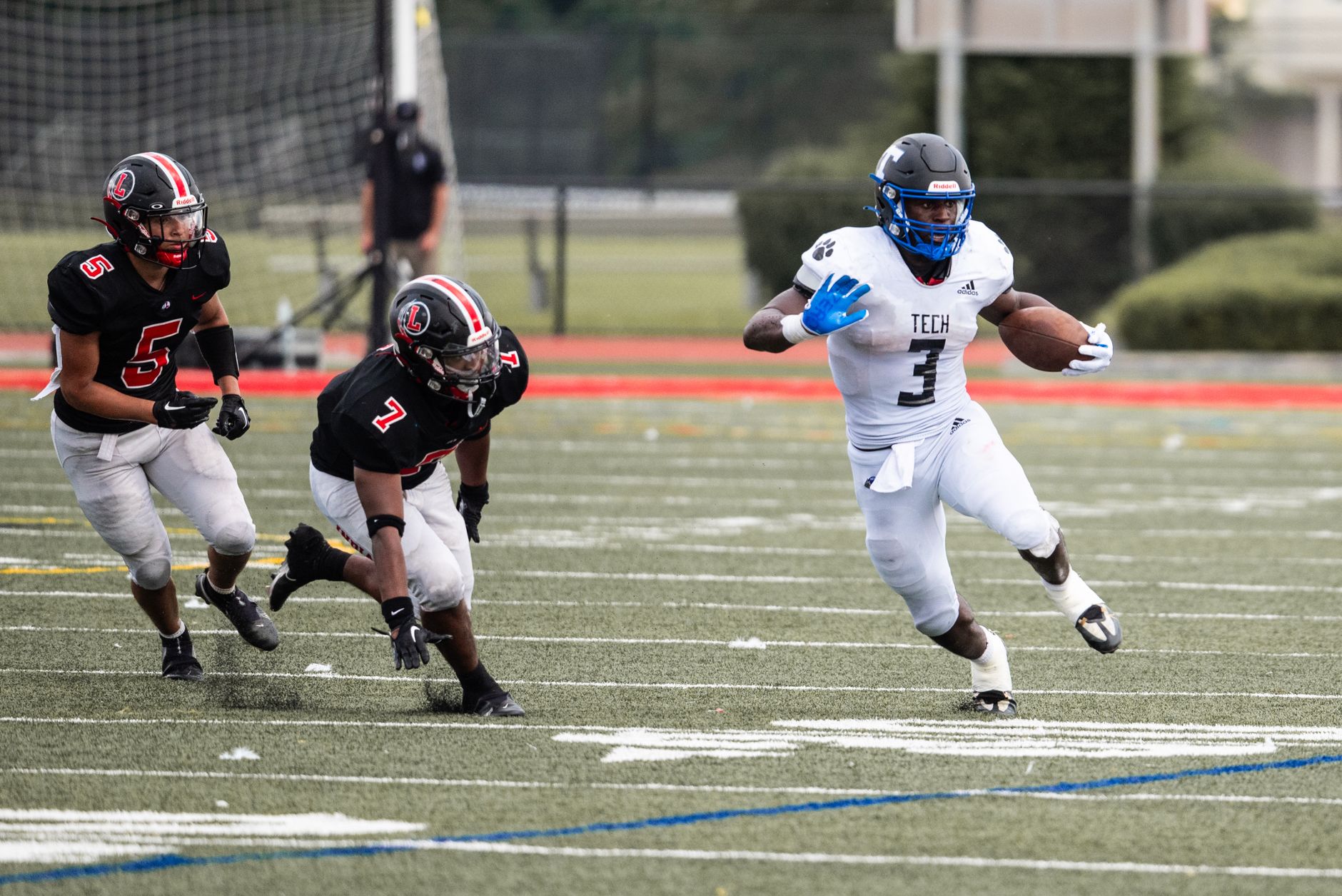
Photo by Hawk i i on Pexels
How do you recover after an incorrect read?
Recover by separating process errors from unavoidable variance, then updating only the assumptions supported by evidence. Review the game’s first-half efficiency, personnel usage, field position, pressure rate, and turnover sequence before deciding what went wrong. This method prevents one surprising score from rewriting your entire understanding of a team.
For example, if a favorite loses after allowing two defensive touchdowns, the result may reflect bad ball security, defensive pressure, or random field position rather than a total collapse. If the favorite was also beaten at the line of scrimmage and failed on third down, however, the loss contains stronger structural information. The final score is the headline; the underlying sequence is the autopsy.
A useful postgame note should include:
- The expectation that proved correct.
- The assumption that failed.
- The statistic that was misleading.
- The tactical adjustment that changed the game.
- The information that should be weighted differently next time.
That habit is not glamorous. It is also how a veteran stops repeating the same expensive mistake in a different stadium.
Frequently Asked Questions
Q: What is college football?
A: College football is American or Canadian-style gridiron football played by collegiate teams under NCAA or related governing structures. In the United States, the main levels include FBS, FCS, Division II, and Division III, each with different schedules, scholarship models, and postseason systems. FBS receives the greatest national media attention because it includes major conferences such as the Big Ten, SEC, Big 12, and ACC. The season generally runs from late August through the regular season, conference championships, bowls, and the College Football Playoff.
Q: How do you find the 2026 college football schedule?
A: Find the 2026 college football schedule through ESPN’s weekly schedule pages, NCAA.com, and individual university athletic websites. ESPN organizes the season from Week 1 through Week 15 and separately lists bowl and CFP games, including dates, kickoff times, networks, locations, and some odds. Always confirm the final time on the school’s official page because television selections, weather, and venue details can change.
Q: What is the difference between FBS and FCS college football?
A: FBS and FCS are different NCAA football subdivisions with distinct postseason formats, scholarship structures, and competitive ecosystems. FBS programs compete in major conferences and pursue the College Football Playoff, while FCS programs typically compete for the FCS championship through a separate playoff bracket. A win over an FCS opponent can help a team prepare, but it should not be evaluated as equivalent to defeating a strong FBS conference opponent.
Q: Are college football rankings reliable?
A: College football rankings are useful summaries, but they are not complete measures of team strength. Rankings can overlook schedule difficulty, quarterback changes, injuries, turnover luck, and the difference between home and road performance. Compare opponent-adjusted efficiency, recent four-game form, line play, and player availability before relying on a ranking for predictions or betting decisions.
Q: How should beginners analyze a college football matchup?
A: Beginners should analyze a matchup by checking schedule strength, quarterback performance, offensive-line health, defensive pressure, explosive plays, red-zone efficiency, and venue conditions. Start with official information from NCAA.com and ESPN, then review the latest depth chart and injury updates before forming a conclusion. A simple written checklist is better than relying on a single ranking, headline, or social-media opinion.
Q: Why can college football statistics be misleading?
A: College football statistics can be misleading when they are produced against uneven opponents or distorted by game script, turnovers, defensive touchdowns, and garbage-time possessions. A team trailing by three scores may accumulate passing yards against prevent coverage, while a winning team may stop attacking aggressively after halftime. Separate opponent quality, score state, and first-half performance from the raw season totals.
Q: Is college football betting safe?
A: College football betting carries financial risk and is not guaranteed to be profitable, even when the analysis appears strong. Legal access, age requirements, and permitted markets depend on your jurisdiction, and odds can change after injury or lineup news. Use only money you can afford to lose, set a fixed budget, avoid chasing losses, and treat Stadium View analysis as information rather than a promise of results.
College football rewards patience because the sport keeps changing while pretending to remain exactly as it was. The old rivalries endure, the helmets still shine under autumn lights, and the crowd still believes one more drive can redeem an entire year. Yet the smartest way to follow the 2026 season is modern and methodical: verify the schedule, distinguish FBS from FCS, examine the matchup beneath the ranking, and respect uncertainty. That combination gives you a clearer view whether you are watching the first Dublin kickoff, tracking the Big Ten, studying SEC pressure packages, or following the road to Las Vegas. Stadium View will keep the focus on evidence, tactics, player statistics, and responsible decision-making, because the game is dramatic enough without inventing certainty.
Ready to follow the next chapter with better context?
End of Transmission
Thank you for reading. Explore more articles from the archive.
Stadium View · Article #4d · 2026