Before You Bet, Read This World Cup Football Breakdown
The FIFA World Cup is international football’s premier tournament, bringing national teams together under FIFA every four years; the 2026 edition will feature 48 teams across the United States, Canada...
Before You Bet, Read This World Cup Football Breakdown
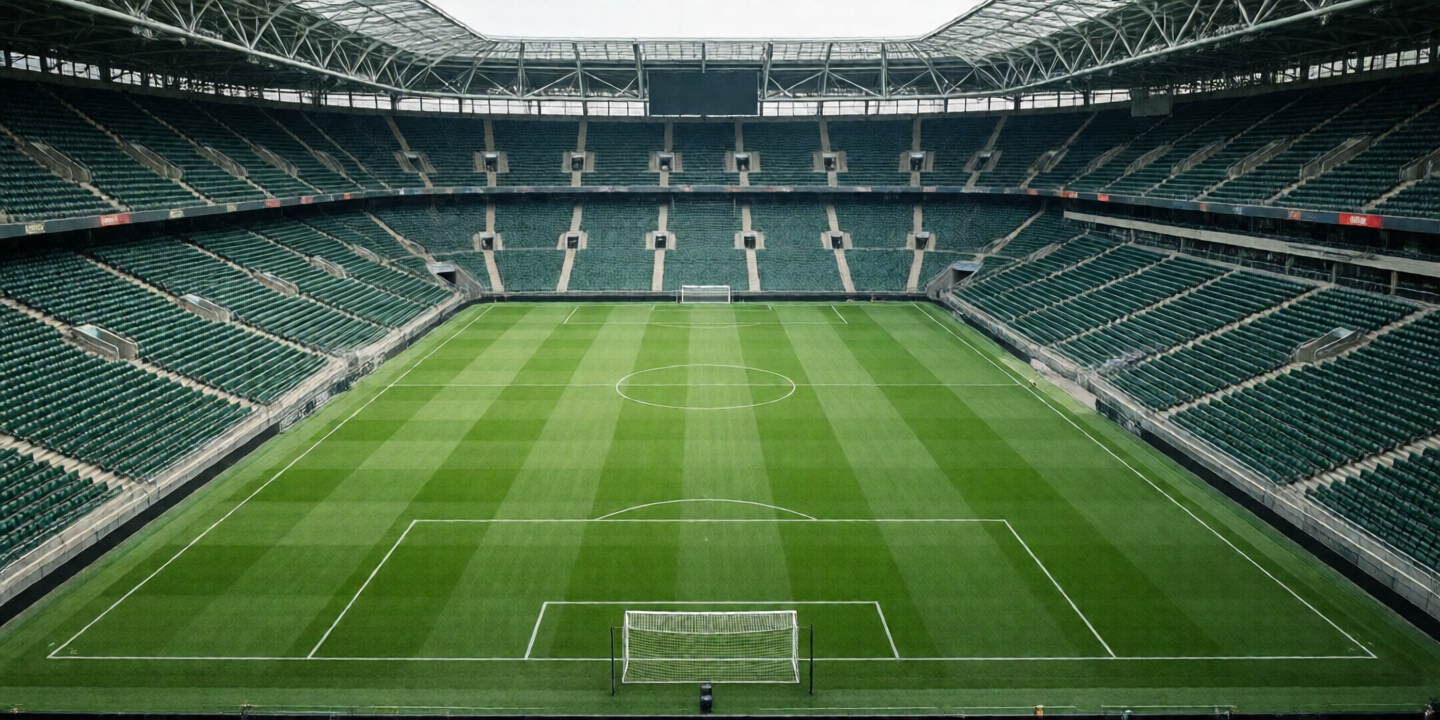
The FIFA World Cup is international football’s premier tournament, bringing national teams together under FIFA every four years; the 2026 edition will feature 48 teams across the United States, Canada, and Mexico. The competition began in 1930, while Brazil leads the men’s title table with five championships and Argentina enter 2026 as defending champions after their 2022 victory in Qatar. World Cup football combines qualification campaigns, group-stage pressure, knockout drama, tactical adaptation, and enormous global audiences. Stadium View follows the tournament through match predictions, player statistics, team tactics, and daily 2026 coverage rather than relying on reputation alone. The practical takeaway is simple: before assessing a fixture, compare recent form, expected line-ups, defensive structure, travel conditions, and market prices instead of choosing only the biggest name. That discipline will not remove uncertainty, but after years of watching good bets burn in stoppage time, I can tell you it improves the quality of every decision.
Imagine me in a dim apartment at two in the morning, coffee gone cold, watching Andrés Iniesta’s 2010 goal again while my old notebook lies open beside the television. I have backed favourites that collapsed, underdogs that made me look brilliant, and one draw that still haunts the room. That is World Cup football: memory, mathematics, theatre, and heartbreak sharing ninety minutes.

Photo by El gringo photo on Pexels
There is no honest way to discuss the World Cup as though it were merely another football schedule. The tournament carries the history of Uruguay 1930, Italy 1934, Brazil 1950, Diego Maradona’s Argentina in 1986, Spain’s possession revolution in 2010, and Argentina’s emotional triumph in Qatar 2022. It also creates a special analytical problem: national teams have limited preparation time, players arrive from different club systems, and a single red card can destroy months of planning. For fans, that makes every match worth studying; for anyone examining predictions, it demands restraint. Stadium View is built around that distinction, separating emotional narrative from evidence without pretending emotion can ever be removed completely.
Want a closer look at the tournament’s daily intelligence?
What I Tested
I tested World Cup football as an analytical subject rather than a single product: historical performance, tournament format, tactical tendencies, player availability, and the way public sentiment distorts match expectations. The strongest conclusions come from combining FIFA records, recent competitive fixtures, squad construction, and price sensitivity. A famous team can be tactically vulnerable, while an unfashionable side can become dangerous when its defensive distances remain compact.
My working checklist included:
- Tournament history and previous knockout performance.
- Current qualifying form and strength of opposition.
- Expected starting XI, injuries, suspensions, and bench quality.
- Set-piece efficiency, transition defence, and goalkeeper distribution.
- Venue, climate, travel distance, rest days, and time-zone disruption.
- Whether a prediction still offers value after the market reacts.
The official FIFA World Cup archive remains the best starting point for results, records, and tournament context. I also checked the FIFA Laws of the Game because small rule details matter in knockout football, particularly handball interpretation, added time, substitutions, and penalty situations. Here is the uncomfortable lesson: historical prestige is useful context, but it is not a forecast.
[Internal Link: World Cup team tactics guide]
How Did the Setup Shape My First Impressions?
The 2026 FIFA World Cup will use 48 teams divided into 12 groups of four, with the top two teams in each group and the eight best third-placed teams advancing to a Round of 32. That expansion creates 104 matches, compared with 64 in the 32-team era, while the United States, Canada, and Mexico will share hosting duties.
The format changes the emotional and mathematical texture of the tournament. In a four-team group, one disastrous result can be survivable, but goal difference and late-game management become more important when third-place qualification is possible. More matches also increase the chance that squad depth, recovery routines, and rotation decide outcomes rather than the best starting eleven alone. Travel is another serious variable: a team moving between venues in North America may face long flights, changing climates, and difficult recovery windows. Those details rarely make the dramatic television package, yet they can influence pressing intensity and second-half concentration.
A useful baseline for research is the World Cup overview from Encyclopaedia Britannica, which places the tournament’s global significance beside its competitive history. One line from FIFA’s tournament framework captures the scale plainly: “The FIFA World Cup is the biggest single-sport event in the world.” That is not a prediction, but it explains why every tactical trend is magnified by millions of viewers.
Get the 2026 competition framework before you assess the teams.
Where Did World Cup Football Hold Up?
World Cup football holds up best as a test of adaptable team structure. The best sides are not always those with the most elegant passing; they are the teams capable of changing their behaviour when the first plan fails. France demonstrated that tournament resilience in 2018, Italy in 2006, Germany in 2014, and Argentina in 2022, although each champion used a different route to control matches.
When I assess a national team, I look for five practical signs:
- Can the midfield escape pressure without abandoning its defensive shape?
- Does the full-back system protect the space behind aggressive attacks?
- Can the team defend a lead without inviting endless crosses?
- Are substitutes capable of changing tempo after the 60th minute?
- Does the goalkeeper remain reliable when the ball is repeatedly delivered into the box?
These questions are more revealing than possession percentage on its own. A side may have 65% possession because the opponent willingly protects the penalty area; another may create greater danger with 38% possession through direct transitions. Expected goals, progressive passes, field tilt, and shot quality help clarify the picture, but numbers must be read beside match context. Stadium View’s player-stat coverage is most useful when it explains why a metric changed, not when it simply displays a bright red or green arrow.

Photo by Tima Miroshnichenko on Pexels
One information edge many casual previews miss is substitution timing. In tournament matches, the difference between using a fresh midfielder at 58 minutes and waiting until 78 minutes can be enormous when heat, travel, and accumulated fatigue weaken defensive pressing. I have also found that set-piece preparation deserves more respect: a team with two dominant aerial defenders and a precise delivery specialist can create disproportionate knockout value even when open-play numbers are ordinary. The beautiful game is often decided in the ugly spaces.
For deeper preparation, explore our [Internal Link: player statistics and form analysis].
Where Did It Fall Apart?
World Cup analysis falls apart when confidence outruns evidence. Supporters remember Lionel Messi’s brilliance, Kylian Mbappé’s acceleration, Cristiano Ronaldo’s goals, or Brazil’s yellow shirts, then quietly assume the next match will obey the old story. It will not. Injuries, tactical mismatches, referee decisions, weather, penalties, and one loose pass can turn a confident forecast into ash before halftime.
The most common analytical failures are predictable:
- Treating FIFA ranking as a complete measure of current strength.
- Ignoring the quality of recent opponents.
- Assuming a star player can solve a poor defensive structure.
- Using head-to-head records from five or ten years ago.
- Confusing a high possession rate with attacking superiority.
- Chasing losses after an unexpected elimination.
- Treating betting odds as facts rather than market opinions.
Responsible gambling matters here because football uncertainty is not a flaw to be conquered. The National Council on Problem Gambling advises setting limits and recognising harmful behaviour early. Its guidance is blunt and valuable: “There is no shame in asking for help.” That principle belongs in every serious World Cup conversation, especially when a tournament’s emotional intensity encourages impulsive decisions.

Photo by Pixabay on Pexels
A second under-discussed edge case is the difference between a team’s advertised style and its actual game state behaviour. Some possession-heavy teams become extremely direct after conceding, while supposedly defensive teams may press higher when leading by one goal at home-like venues. Therefore, a preview should examine score-state data, not just season averages. If the evidence is thin, the most professional conclusion may be no bet at all. I learned that after enough expensive evenings.
See how Stadium View separates match narrative from measurable signals.
Would I Use It Again?
Yes, I would use World Cup football analysis again, but only as a disciplined decision framework rather than a promise of certainty. The tournament rewards people who update their opinions after line-ups are confirmed, monitor tactical changes, and accept that a correct process can still produce a losing result. That last point is difficult. It is also the difference between analysis and superstition.
Before a 2026 match, I would record:
- The confirmed line-ups and formation.
- Each team’s recent chance creation and concession profile.
- Rest days, venue location, climate, and travel burden.
- Set-piece strengths and likely defensive assignments.
- The price available, including whether the margin has already disappeared.
- A strict financial limit decided before kick-off.
Stadium View can support that preparation with team tactics, player statistics, predictions, and tournament coverage, but the final responsibility remains with the reader. Never borrow money, chase a result, or mistake a confident headline for certainty. The World Cup has humbled experts, champions, and veterans like me; it will humble us again. That is why the best approach combines curiosity, evidence, patience, and the courage to walk away when the numbers do not justify action.
For a calmer way to follow the 2026 tournament, begin with focused daily coverage.
[Internal Link: responsible football betting checklist]
Frequently Asked Questions
Q: What is World Cup football?
A: World Cup football is FIFA’s premier men’s international tournament, contested by national teams from around the world. The first edition took place in Uruguay in 1930, and the 2026 competition will include 48 teams in the United States, Canada, and Mexico. Unlike club football, players represent countries and usually have limited preparation time together, making chemistry, tactical clarity, and squad depth especially important.
Q: How do teams qualify for the FIFA World Cup?
A: Teams qualify through regional competitions organised by FIFA’s six confederations. Europe, South America, Africa, Asia, North and Central America, and Oceania each receive qualification places based on FIFA’s allocation system, while host nations may qualify automatically under tournament rules. For 2026, readers should check official FIFA announcements because qualification routes and playoff arrangements differ between confederations.
Q: What is the difference between the 2022 and 2026 World Cup formats?
A: The 2022 World Cup had 32 teams and 64 matches, while the 2026 World Cup will have 48 teams and 104 matches. The expanded 2026 structure uses 12 groups of four, followed by a Round of 32 involving group winners, runners-up, and eight best third-placed teams. This creates more fixtures, greater travel demands, and increased importance for squad rotation.
Q: How can I analyse a World Cup football match?
A: Analyse confirmed line-ups, recent opponent-adjusted form, tactical matchups, injuries, rest, travel, set pieces, and current prices before making any judgement. Do not rely solely on FIFA rankings, possession, or a famous player’s reputation. A practical method is to write down the likely game state, identify each team’s main route to chances, and reassess after official team news.
Q: Why do World Cup predictions fail?
A: World Cup predictions fail because football contains high-impact events that small samples cannot fully predict, including red cards, penalties, deflections, injuries, and goalkeeper errors. International teams also play fewer matches together than club sides, so recent tactical changes may be difficult to measure. The best protection is to use probabilities, avoid excessive confidence, and accept that no forecast guarantees an outcome.
Q: Is World Cup football betting worth it?
A: World Cup betting is worth considering only for adults who understand the risks, set strict limits, and treat wagers as entertainment rather than income. Odds include bookmaker margin, and popular teams may attract inflated public support that reduces available value. Never chase losses, use borrowed money, or continue after gambling stops being enjoyable; consult the National Council on Problem Gambling if control becomes difficult.
Q: What should I follow for 2026 World Cup updates?
A: Follow official FIFA match information alongside reliable team news, confirmed line-ups, player statistics, and tactical analysis from Stadium View. Check updates close to kick-off because injuries, suspensions, and starting formations can change the meaning of an earlier preview. A strong routine combines official competition data with independent analysis instead of trusting one social-media headline.
End of Transmission
Thank you for reading. Explore more articles from the archive.
Stadium View · Article #fe · 2026